
What Is Tenebrism in Art?
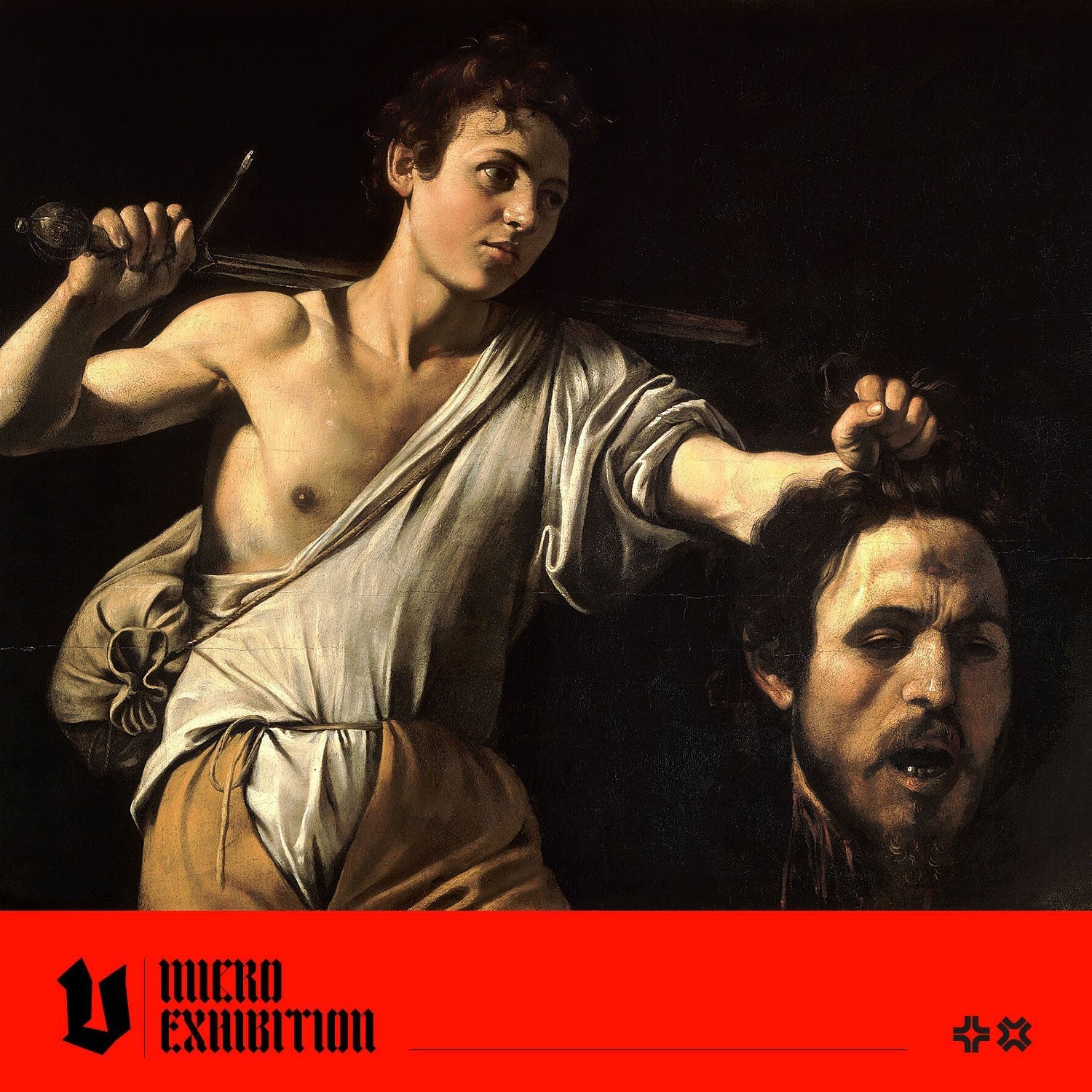
Tenebrism describes a way of painting in which darkness plays a dominant role. Rather than illuminating an entire scene, light is used selectively, highlighting key elements, like figures, expressions or gestures, while the surrounding space is in shadow.
 'David with the Head of Goliath' by Caravaggio
This extreme contrast is designed to heighten intensity by restricting what is visible. The result is that the artist directs attention to what matters most, and darkness actively shapes how the image is read, becoming a compositional force rather than a neutral backdrop. The technique is closely associated with Caravaggio, and painters across Europe, including the French artist Georges de La Tour, the Dutch painters Gerrit van Honthorst and Hendrick ter Brugghen, and the Spanish painter Francisco de Zurbarán.

'A Man Singing by Candlelight', by Adam de Coster
Tenebrism vs Chiaroscuro: What’s the Difference?
Although the two terms are often used interchangeably, tenebrism and chiaroscuro describe very different artistic approaches to light.
How Chiaroscuro Uses Light to Create Form
Chiaroscuro uses light and shade to create form, and even in dramatic compositions, most of the image remains visible. In works such as Leonardo da Vinci's 'The Virgin of the Rocks' , the artist uses chiaroscuro to create form and mood. Although the scene is dimly lit, the shadows around the subjects remains informative, keeping the figures, setting, and objects legible. Darkness supports the image rather than suppressing it.

'The Virgin of the Rocks' by Leonardo da Vinci
How Tenebrism Uses Darkness to Withhold Information
In tenebrism, the eye is forced to look exactly where the artist intends it to; large areas of the image are allowed to fall into near-black. Light does not illuminate the whole scene; instead, it isolates an action, a gesture, or a face, while everything else is obscured. By comparison, in chiaroscuro, the eye is guided gently across the image.
In tenebrist paintings, such as 'St Paul the Hermit' by Jusepe de Ribera, darkness is not a backdrop but a compositional tool. It withholds information, allowing light to strike only selected areas, producing a heightened sense of drama, isolation, and spiritual intensity.

St Paul the Hermit by Jusepe de Ribera
How Do I Identify Tenebrism?
In the examples we've included in our article, tenebrism is used in its stricter sense: works in which darkness dominates the composition and light is applied selectively to isolate figures or actions, rather than to model space or form, but it's important to remember that tenebrism and chiaroscuro are closely related and artists often moved fluidly between the two techniques.

'Judith Slaying Holofernes' by Artemisia Gentileschi