
What would make a tsar kiss a corpse? In 1697, Peter the Great visited the Amsterdam studio of Dutch anatomist Frederik Ruysch and did just that. According to the Linda Hall Library, he was "so taken by" one of the specimens that he couldn't help himself. Twenty years later, he came back and bought the whole collection for 30,000 guilders. Today, we're learning about Frederik Ruysch, his innovations in anatomy, and his influence from vanitas art. Let's go!

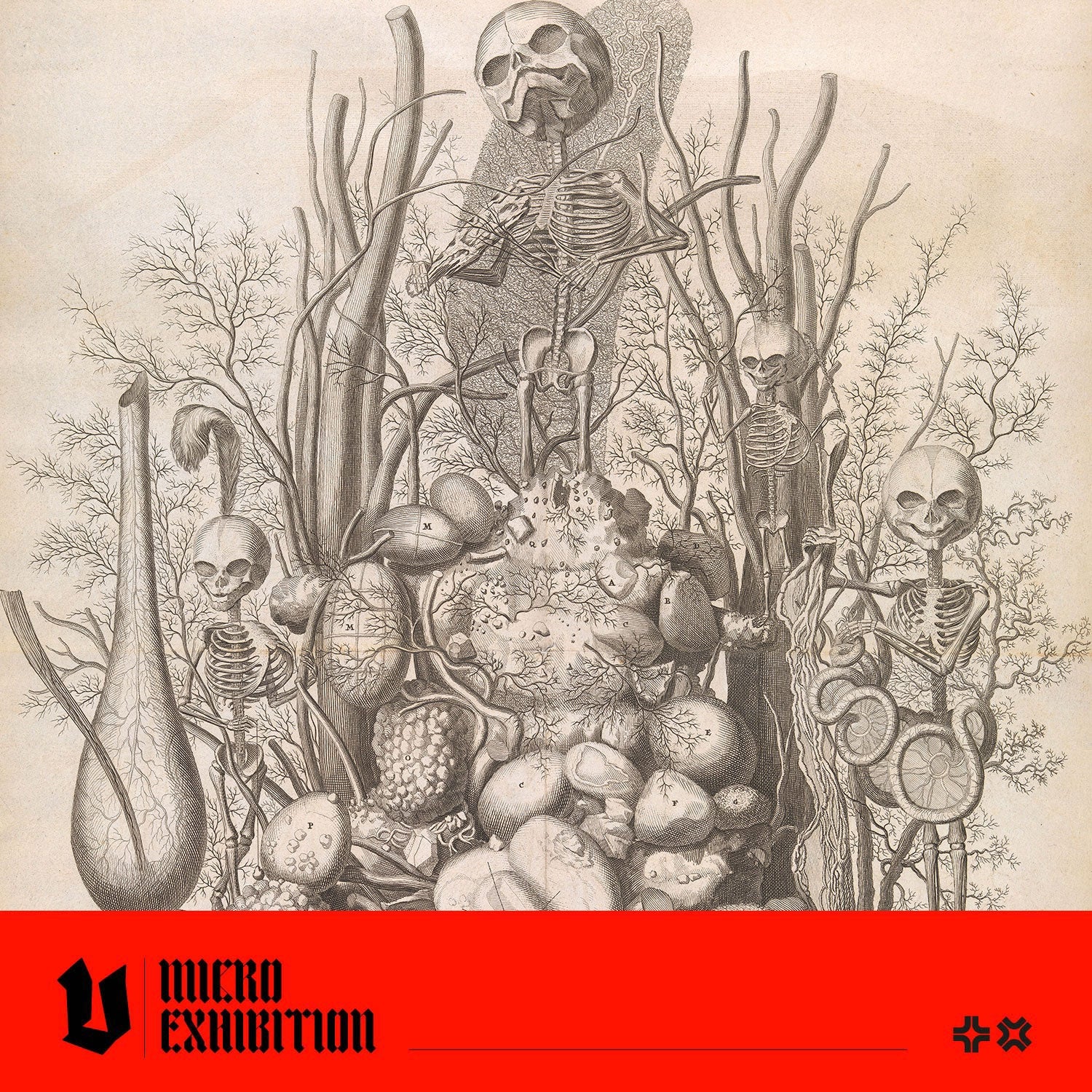
Engraving by Cornelis Huyberts, from Frederik Ruysch's Opera Omnia, 1737 via The Linda Hall Library
Who Was Frederik Ruysch?
Frederik Ruysch was born in The Hague in March 1638 and died in Amsterdam on 22 February 1731, at the age of 92. Over the course of his long life, he accumulated an extraordinary range of roles: scientist, physician, botanist, teacher of midwives, forensic advisor to the courts, and became one of the most celebrated anatomists of the day. This article takes a closer look at his unique embalming technique and its impact on the study of anatomy.

Portrait of Professor Frederik Ruysch by Juriaen Pool, 1702
Frederik Ruysch’s Preservation Techniques
What set Frederik Ruysch apart from his anatomical contemporaries was his technical mastery. To map out the microscopic pathways of the human body, he relied on a two-step process. First, he injected a warm, liquid wax mixture stained with cinnabar (red mercuric sulfide) directly into the blood vessels. Once it cooled and hardened, it permanently plumped the tissue, giving the organs a vibrant, living appearance. Second, he submerged these prepared specimens in a crystal-clear preservation fluid he called liquor balsamicus to keep them flexible and free from decay.
If you search for the recipe of the fabled liquor balsamicus today, you will find various competing accounts; everything from distilled alcohol and black pepper to more exotic concoctions involving mercury compounds and animal blood. The truth is that historians have never reached a consensus. Ruysch himself never disclosed the formula during his lifetime, and while a German anatomist named Johann Christoph Rieger claimed in 1743 to have uncovered it, describing a base of alcohol distilled from wine or corn, with black pepper added, this has never been definitively verified. What we do know is that whatever he used, it worked: three centuries later, many of his wet specimens retain their colour, flexibility, and an unsettling appearance of life. Hundreds of the original specimens are still in St Petersburg, on display at the Kunstkamera museum. You can see some examples here.

Engraving by Cornelis Huyberts, from Frederik Ruysch's Opera Omnia, 1737 via The Linda Hall Library
The Ruysch Museum
From 1667, Ruysch was demonstrator of anatomy at Amsterdam’s Surgeons’ Guild, teaching surgeons and midwives. But public demand quickly outgrew the lecture theatre, and so he opened his collection to visitors, making it one of the first places ordinary people could actually see the inside of the human body. It became a major attraction, spread across five rooms in his private residence and was open two days a week.
He catalogued everything in a lavishly illustrated series called the Thesaurus Anatomicus, published in ten parts between 1701 and 1716. The engravings by Cornelis Huyberts were extraordinary, serving as both a scientific record and stunning illustrations.

Botanical and zoological preparations including a turtle's egg with part of the foetus shown, Frederik Ruysch, Wellcome via Wikipedia
The Anatomical Tableaux
Ruysch’s most celebrated works were his anatomical tableaux — arrangements of foetal skeletons and human remains that were, depending on your tolerance for the macabre, either deeply unsettling or strangely beautiful. Visitors described a skeleton of a four-year-old holding a toy, a five-year-old dangling an embalmed heart on a silk thread, and a girl dabbing her eyes with a handkerchief. A foetus lay with a bouquet in its hand and a crown of preserved flowers on its head. His daughter Rachel, herself a gifted still life painter, helped decorate the displays with flowers, shells, and lace.
Ruysch himself would have been baffled by anyone calling this grotesque. He saw these pieces firmly in the tradition of Dutch vanitas painting — the same culture of memento mori he had grown up surrounded by.
In 17th-century Dutch culture, vanitas art was everywhere: paintings of skulls, wilting flowers, and guttering candles that reminded viewers of life’s fragility. Ruysch was working in that same tradition, and he wrote in the Thesaurus Anatomicus that his aesthetic embellishments were intended to “charm the eye” and allay the distaste of people who were naturally put off by the sight of corpses. The tableaux, with their poems and captions, were designed to provoke religious and philosophical reflection — a meditation on mortality rather than a spectacle of death. (New York Review of Books)
Sadly, none of the original tableaux has survived, and they exist today only through the engravings of Cornelis Huyberts, a selected range of illustrations which will be featured in our upcoming image archive, Cabinet of Curiosities (stay tuned for updates!)

Botanical and zoological preparations including a crocodile's egg opened to show the developing foetus, Frederik Ruysch, Wellcome via Wikipedia
Frederik Ruysch’s Influence
The Ruysch collection captured the imagination of writers for centuries. Balzac’s 1831 novel La Peau de Chagrin features a scene in which the protagonist encounters a child preserved in wax, described as a relic from Ruysch’s collection. The Italian poet Giacomo Leopardi was so taken with Frederik Ruysch that he wrote a celebrated piece, Dialogue between Frederick Ruysch and His Mummies (1827), imagining what his preserved specimens might say if they could speak.
When Peter the Great bought the collection in 1717, Ruysch refused to help pack it. It took another man over a month to catalogue and crate the 100 packages. Characteristically, Ruysch immediately began building a new collection at his home on the Bloemgracht. He was 79 years old.

Cornelis Huyberts, Thesaurus Anatomicus, Vol. 3, Tab. 4. Frederik Ruysch, 1701–1716.
Feeling inspired?
Explore the world of vintage anatomy with Vault Editions’ image archives, featuring hundreds of beautifully illustrated anatomical illustrations, restored and curated by our in-house team. Each image is available as a high-resolution 300 DPI download for seamless integration into your digital workflow.