The Italian Chapel on the Orkney Islands: A Testament to Craftsmanship During World War Two
Orkney’s Italian Chapel is a remarkable building and a testament to the craftsmanship of the people who built it and worshipped there. It was built by hand and from repurposed materials during World War Two by a group of Italian prisoners of war (POW’s) interred on the islands. We heard about this intriguing building and had to see it for ourselves; read on to find out more!

Interior of the Chancel of the Italian Chapel
Introducing the Italian Chapel in Orkney
The Orkney Islands are an archipelago off the northeastern coast of Scotland; the islands are beautiful and home to seals, birds (including puffins!), dolphins, orcas and whales, as well as Skara Brae, a stone-built Neolithic settlement over 5,000 years old.
However, today we’re just travelling back to Orkney in 1942, when several hundred Italian POWs captured by the British and allies were held in an internment camp, known as Camp 60. They were tasked with building what was known as ‘The Churchill Barriers’. These were huge barriers made of stone and concrete, blocking sea passage between the islands and designed to prevent enemy U-Boats from penetrating the sea defences and sinking battleships. This task took several years, 66,000 blocks of concrete, and over 250,000 tons of stone.
However, today we’re just travelling back to Orkney in 1942, when several hundred Italian POWs captured by the British and allies were held in an internment camp, known as Camp 60. They were tasked with building what was known as ‘The Churchill Barriers’. These were huge barriers made of stone and concrete, blocking sea passage between the islands and designed to prevent enemy U-Boats from penetrating the sea defences and sinking battleships. This task took several years, 66,000 blocks of concrete, and over 250,000 tons of stone.

The Italian Chapel
How was the Italian Chapel Built?
The prisoners needed a chapel to worship in, and in 1943, the camp commander, Major T.P Buckland, the padre, Father P. Gioacchino Giacobazzi and artist and POW Domenico Chiocchetti (who had previously made a figure of St. George for the camp’s square from barbed wire and cement) came together to make this into a reality. They were assigned two Nissen huts (a prefabricated, half-cylindrical structure made of corrugated steel laid over a curved metal frame) which were joined together end to end to create a long, arched structure.

Interior ceiling of the Chancel of the Italian Chapel
Interior ceiling of the Chancel of the Italian Chapel
The chapel had to be built and decorated using scrapped and repurposed materials. To this end, Domenico Chiocchetti enlisted a group of helpers, including Buttapasta (a cement worker), Palumbi (a smith), Primavera and Micheloini (electricians), Barcaglioni, Battiato, Devitto, Fornasier, Pennisi, Sforza, and more.

Holy water font at the Italian Chapel
The chapel began with the construction of the chancel, made of plasterboard, and the altar, altar rail, holy water font, and stoop are made of concrete. The candelabra were made by Primavera and Palumbi, who also spent four months making the wrought iron rood screen.

Wrought iron rood screen at the Italian Chapel
Domenico Chiocchetti painted the frescoes in the chancel, including the centrepiece of the altar; a painting of the Madonna and Child was based on a picture he carried throughout the war.

Madonna and Child in the Chancel of the Italian Chapel
Once the decoration of the first hut was complete, the second hut (originally intended as a school) looked plain and utilitarian by comparison, so it was decided that the interior would be hand-painted too. Chiocchetti invited another artist to help him, and the two men hand-painted the interior to resemble bricks, a stone dado rail, and religious murals.

Painted brick interior of the Chancel of the Italian Chapel
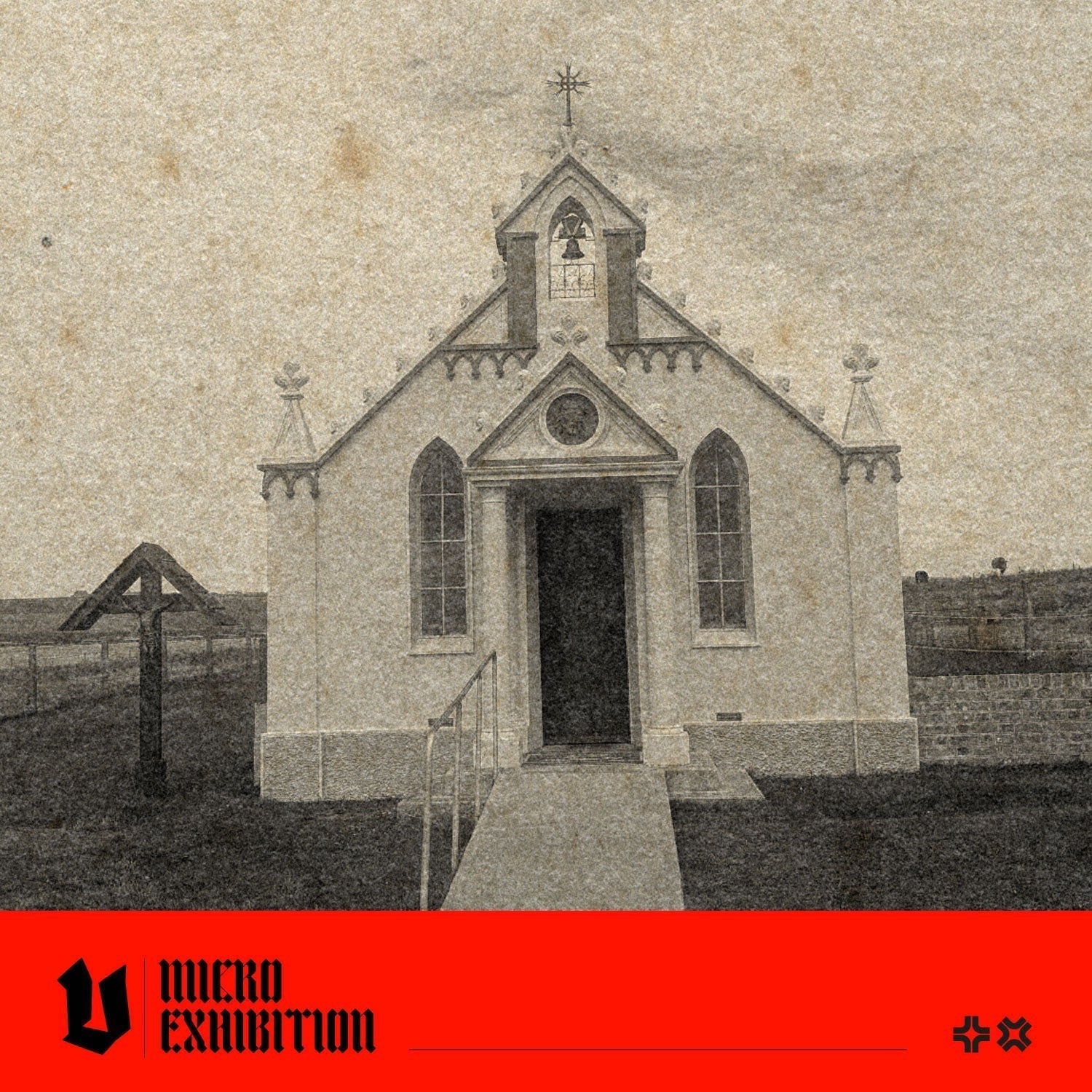
The exterior of the huts needed to match the magnificent interior, so Buttapasta created a facade with a belfry and Gothic pinnacles. They decorated the space with stained glass windows, gold curtains (purchased via the prisoners’ welfare fund), and Pennisi moulded a red clay impression of the head of Christ for the archway.

Exterior of the Chancel of the Italian Chapel
The prisoners left the Orkneys in September 1944, but Domenico Chiocchetti stayed on to finish his altar. Today, more than 100,000 visitors a year visit the Italian Chapel in Lambholm, Orkney, and we highly recommend a visit.

Interior showing painted stone work in the Chancel of the Italian Chapel
The Legacy of the Italian Chapel
The Lord Lieutenant of Orkney, Mr P.N. Sutherland Greene, promised the Italian community that the local Orcadians would take care of their chapel, and when it was finished, a special service was held.

Painted brick ceiling interior of the Chancel of the Italian Chapel
After the war ended in 1945, Camp 60 was demolished, and today, only the chapel and the statue of St George remain. Over the years, the chapel has been repaired and tended to by the preservation committee; it has been the subject of BBC news reports, and in 1960 and 1964, Domenico Chiocchetti returned to Orkney for visits marked by special services at the chapel and the opportunity to restore his beloved artwork.
An excerpt from his letter to the people of Orkney reads:
"The chapel is yours - for you to love and preserve. I take with me to Italy the remembrance of your kindness and wonderful hospitality.”
In 1992, eight former POW’s returned to Orkney with their families, where a Mass was held, and celebrations were attended by the local people and dignitaries. Bruno Volpi, one of the original builders of the chapel, said;
“People cannot be judged by their precarious situations. Their culture, spirit and will to express themselves in creative thoughts and deeds are stronger than any limitation to freedom. This is the spirit that gave birth to the works of art in Lambholm.”
“People cannot be judged by their precarious situations. Their culture, spirit and will to express themselves in creative thoughts and deeds are stronger than any limitation to freedom. This is the spirit that gave birth to the works of art in Lambholm.”
We researched this blog post using the ‘Orkney’s Italian Chapel’ booklet available in the chapel shop, and all photographs were taken by Vault Editions. For more information, please visit the official website.

St George slaying the dragon statue, near the site of the Italian Chapel