The Art of Botanical Illustration: Five Artists You Should Know
Today we're celebrating five botanical artists whose work continues to inspire illustrators, designers and nature lovers, and whose spirit you can channel in your own drawing practice. We've previously written about Maria Sibylla Merian and Rachel Ruysch, and today we're adding five more to the collection. Let's go!
Pierre-Joseph Redouté, known as "the Raphael of Flowers."
Pierre-Joseph Redouté was born in Saint-Hubert, Belgium, in 1759 and moved to Paris in 1782. In Paris, he became the official court artist to Marie Antoinette, and later to Empress Joséphine Bonaparte, wife of Napoleon.
His career with Joséphine produced his most celebrated work. An obsessive rose collector, Joséphine assembled over 250 varieties at her estate, Château de Malmaison. Even during the Napoleonic Wars, British ships carrying plants for Malmaison received safe passage. Redouté documented the flowers in his series, Les Roses (1817–1824), published in three volumes with around 170 stunning coloured plates, and recorded varieties that have since become extinct, making it as much a conservation document as a work of art. Joséphine died before Les Roses was published and never saw the finished work. His series, Les Liliacées, ran to eight volumes and over 450 plates.
During his lifetime, Redouté produced over 2,100 plates and earned the nickname "the Raphael of Flowers." He pioneered stipple engraving, building images from tiny dots rather than lines, to replicate the translucency of his watercolours on vellum.

Rosa Gallica by Pierre Joseph Redouté from his Les Roses series
Georg Dionysius Ehret, one of the greatest artist-illustrators of his era
Georg Dionysius Ehret was born in Heidelberg in 1708. His father was a gardener and taught him horticulture and drawing, a combination that would define his life. His early career had difficult moments; an apothecary in Regensburg employed the young Ehret to draw specimens from his herbarium. After Ehret produced over 500 drawings in a single year, the apothecary fired him, claiming he should have produced 1,000, to avoid paying him.
Ehret eventually settled in England around 1736 and became Europe's most sought-after botanical artist. His most significant collaboration was with the famous Swedish botanist Carl Linnaeus, who was developing his revolutionary system of plant classification. Ehret illustrated Linnaeus's Systema Naturae and the Hortus Cliffortianus (1737), and their work together produced what became known as the Linnaean style of botanical illustration; Linnaeus said Ehret was the greatest artist-illustrator he had ever worked with. He was elected a Fellow of the Royal Society in 1757, and around 1,000 of his drawings survive at the Natural History Museum in London.

Georg Dionysius Ehret, Plantae Selectae No. 38, 1756
Elizabeth Blackwell, creator of The Curious Herbal
Born in 1699, Elizabeth Simpson's father, Leonard Simpson, was a painter, and she trained as an artist from a young age. She married in 1733, and her husband, Alexander Blackwell, took what some might call a roguish approach to business: he practised as a physician without medical training, set up as a publisher without completing the required apprenticeship, and accumulated fines he could not pay, eventually landing in debtors' prison.
Elizabeth, left without income, devised a plan. She had identified what physicians needed: at the time, no accurate and affordable illustrated herbal (a reference book identifying and depicting medicinal plants) existed in England. She would make one, sell it by subscription to physicians and apothecaries across Britain, and use the proceeds to secure his release.
She rented lodgings next to the Chelsea Physic Garden and drew each plant from life, transferred her sketches onto copper plates, engraved them herself, and hand-coloured each impression. Alexander, from prison, provided the plants' scientific nomenclature and common names. Sir Hans Sloane, the physician and naturalist, provided financial support to publish the work. A Curious Herbal was first published in weekly instalments between 1737 and 1739 and eventually contained over 500 plates. It was a critical and commercial success, allowing her to free her husband.
She was the first woman in Britain to publish a herbal, and one of the first botanical artists to draw, engrave and colour her own work without assistance. Carl Linnaeus gave her the affectionate nickname Botanica Blackwellia.
As for Alexander, his life took a further turn for the dramatic; he travelled to Sweden, became involved in a conspiracy against the Swedish king, and was beheaded for treason on 29 July 1747. According to contemporary accounts, he apologised on the scaffold for laying his head on the wrong side of the block, explaining that it was, after all, his first time. Having previously sold the rights to her masterpiece to clear the last of his debts, Elizabeth lived out her remaining years quietly in London until her death in 1758.

Elizabeth Blackwell, Peach tree from A Curious Herbal, 1737-39
Anne Pratt, the illustrator who brought botanical art to the masses
Anne Pratt was born in Strood, Kent, in 1806. She suffered from rheumatic fever and a stiff knee that meant she spent most of her childhood indoors. Her family encouraged her to draw, and a family friend, Dr Dods, introduced her to botany.
She was entirely self-taught, a fact that the academic botanical establishment used against her throughout her career, but that didn’t stop her. Anne’s illustrations were botanically accurate, beautifully composed, and written in an accessible style that brought botany to audiences previously excluded from it. She wrote over 20 books, all of which she illustrated herself. Queen Victoria praised her work publicly, and her books became a fixture in schools and homes across Britain. She kept going until she was in her eighties, dying at the age of 86.

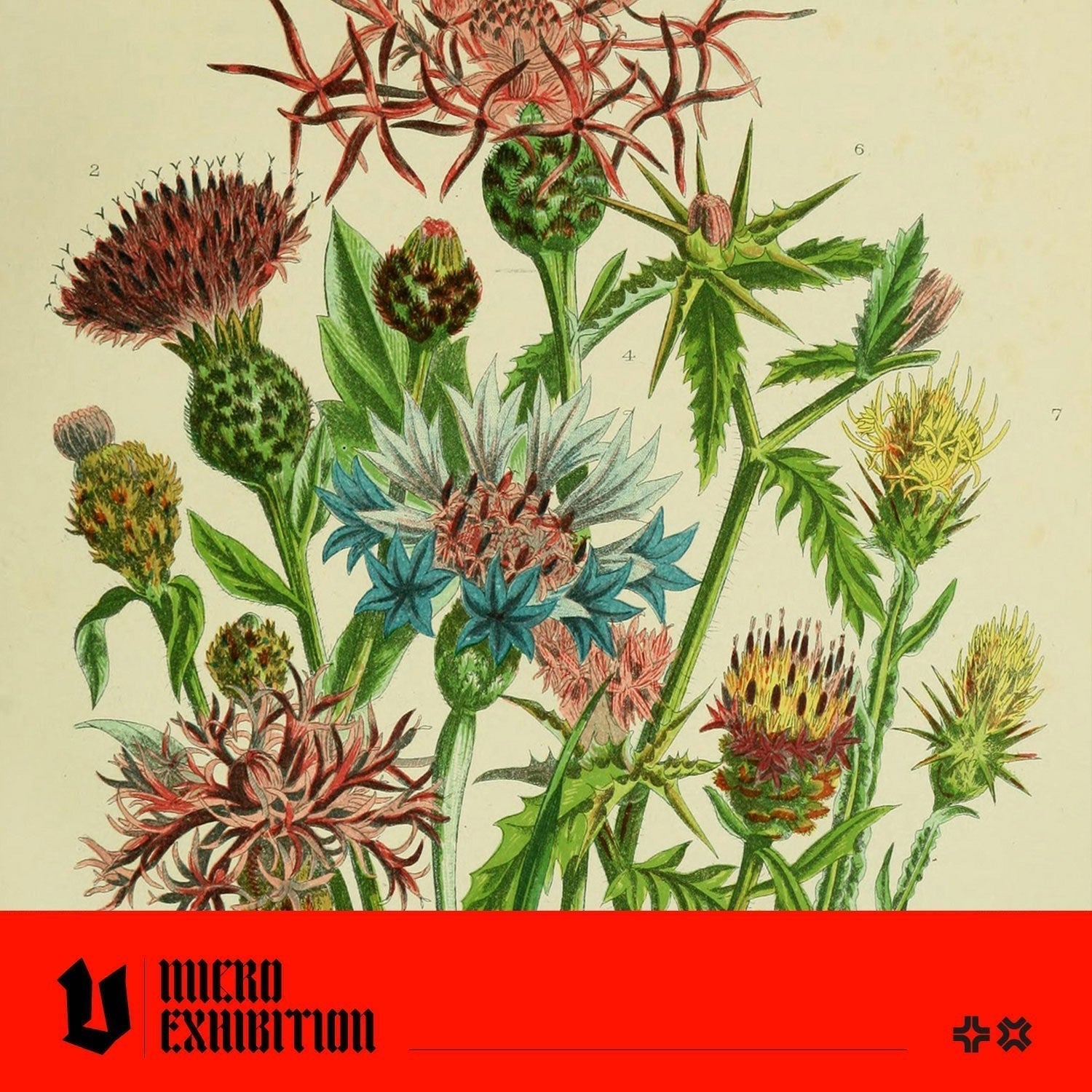
Anne Pratt, The Flowering Plants, Grasses, Sedges, & Ferns of Great Britain and Their Allies, the Club Mosses, Horsetails, etc. Volume 2. 1905.
Feeling Inspired?
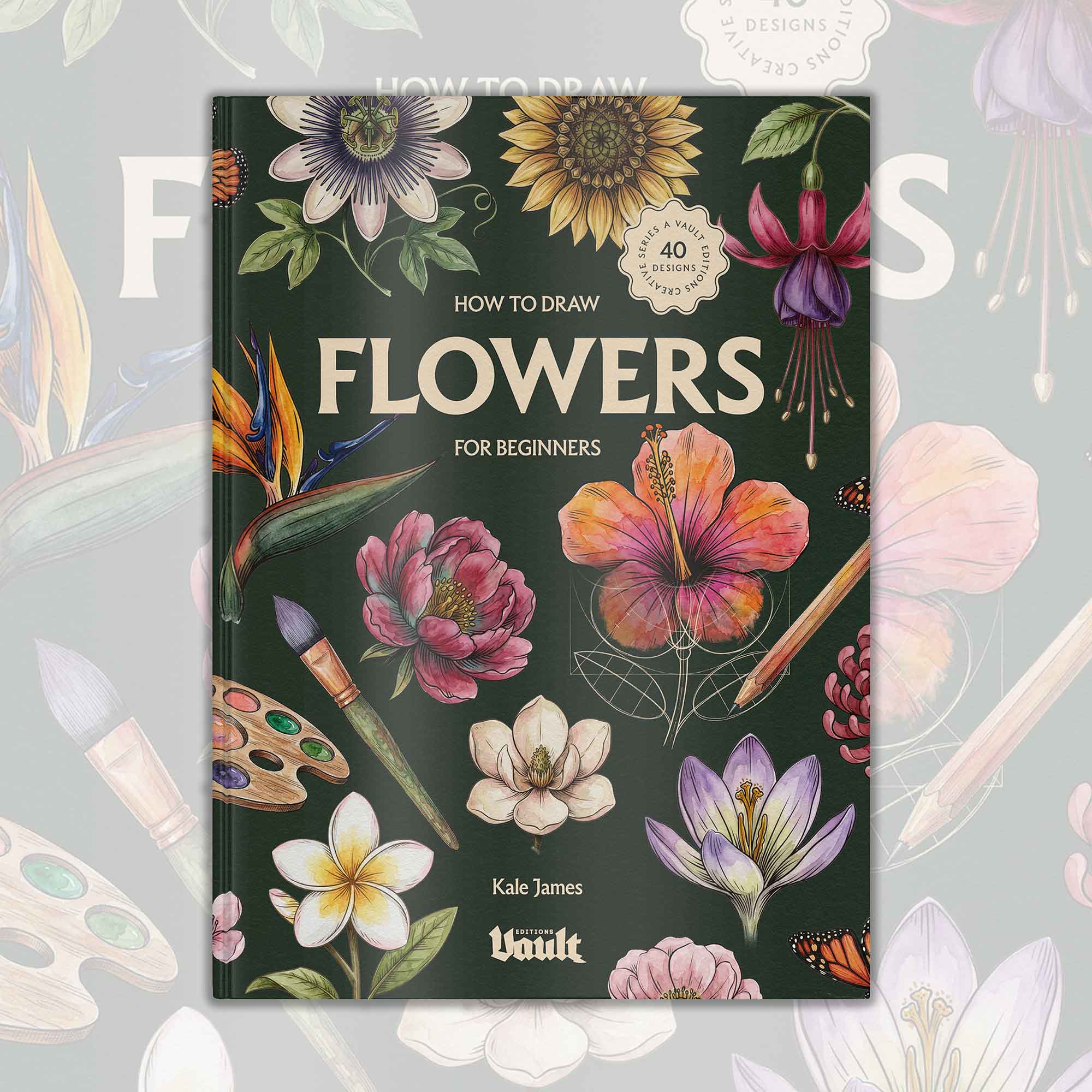
Our new book, How to Draw Flowers, is a step-by-step guide to botanical drawing for beginners and includes 40 stunning, full-colour drawing tutorials, illustrated by Kale James, the Vault Editions creative director. Get your copy today and start making your own botanical art.