What does it take to become the most celebrated flower painter in Europe, raise ten children, and still be producing masterpieces in your eighties? Read on to find out more about Rachel Ruysch, one of the Dutch Golden Age’s most remarkable artists.

Flowers in a Glass Vase, with Pomegranates, on a Marble Balustrade, by Rachel Ruysch, 1716
Who Was Rachel Ruysch?
Rachel Ruysch was born in The Hague on 3 June 1664 and died in Amsterdam in 1750, at the age of 86. She was the daughter of Frederik Ruysch, the celebrated Dutch anatomist we wrote about recently (check out the article here!), and of Maria Post, daughter of the architect Pieter Post. Art ran deep in the family, but so did science, and it was the combination of the two that would define Rachel’s work.
She painted from the age of fifteen until she was eighty-three, a span of over six decades. We know this with unusual certainty because she signed her paintings with her age, a habit that makes her one of the best-documented painters of the Dutch Golden Age.

Vase of Flowers with an Ear of Corn, by Rachel Ruysch, 1742, National Gallery of Ireland, Dublin
Growing Up in the Cabinet of Curiosities
Rachel’s unusual upbringing gave her a head start that no academy could have provided. Growing up surrounded by her father’s vast collection of anatomical specimens, animal skeletons, botanical samples, and preserved insects, she had an extraordinary natural laboratory to draw from. She began sketching and painting the contents of the collection from an early age, developing the meticulous eye for natural detail that would define her mature work. In time, she became so accomplished that she ended up teaching her father, and her sister Anna how to paint.
At fifteen, she was apprenticed to Willem van Aelst, one of Amsterdam’s most prominent flower painters, whose studio looked out over the studio of the celebrated flower painter Maria van Oosterwijck. Van Aelst taught her technique and how to arrange a bouquet so it looked spontaneous rather than composed, a trick that gave her paintings an unusual sense of life and three-dimensionality. By the time she was eighteen, she was producing and selling independently signed works.

Festoon of Flowers Hanging on a Nail, by Rachel Ruysch, 1682
What Made Rachel Ruysch's Paintings Unique?
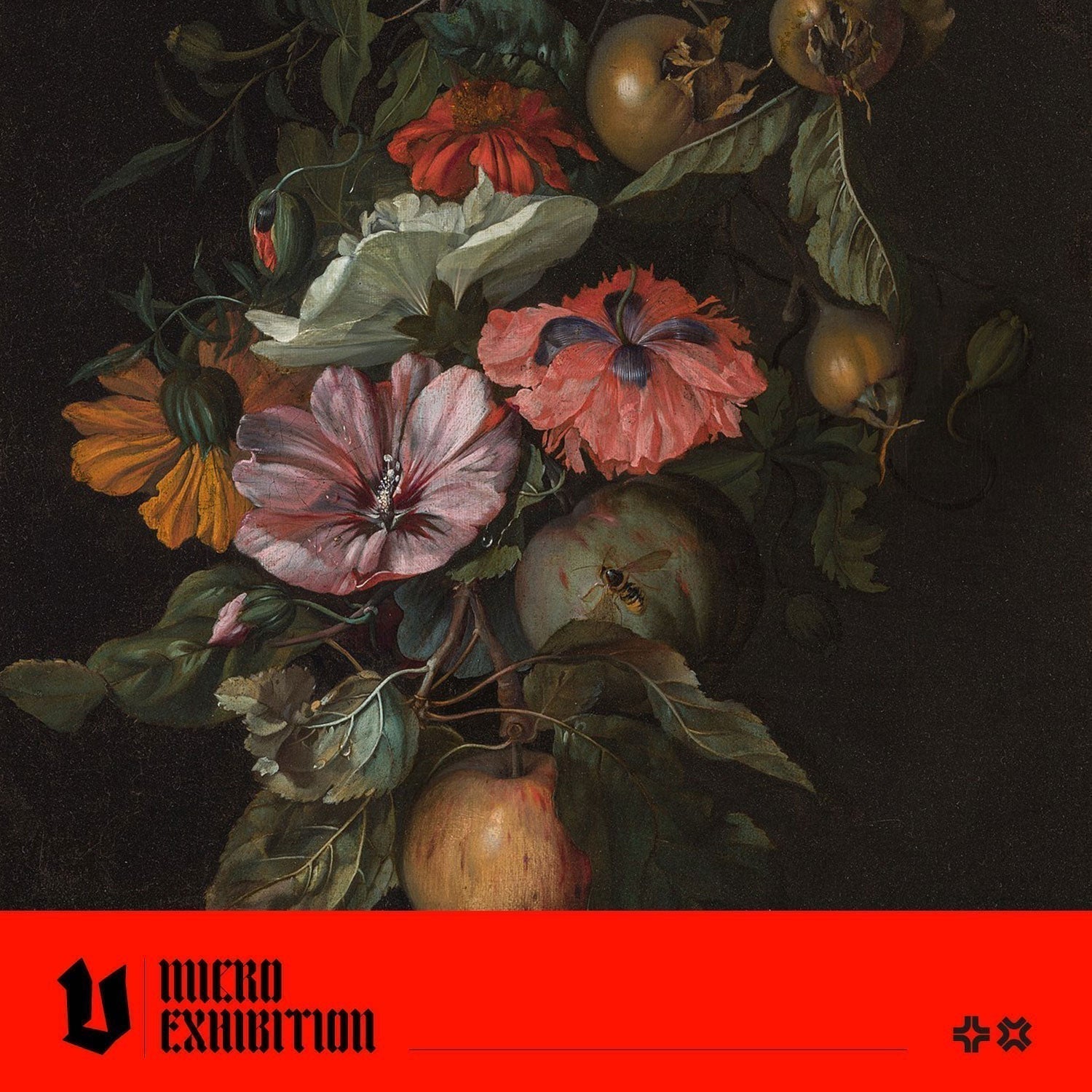
Rachel Ruysch was a still life painter who specialised in flowers — but calling her a flower painter undersells what she actually did. Where many of her contemporaries favoured restrained, scientifically accurate botanical compositions, Ruysch developed something far more dynamic. Her bouquets feature twisting stems, suspended blossoms, and dramatic diagonals that seem to defy gravity. The backgrounds are typically dark, which was the fashion of the period, but against them her flowers burn with an almost impossible vividness.

Roses, Convolvulus, Poppies, and Other Flowers in an Urn on a Stone Ledge, by Rachel Ruysch, 1688
She combined the minute scientific observation she had learned from her father’s collections with imagined arrangements that could not exist in nature — flowers from different seasons placed together, insects perched improbably on petals, compositions that were simultaneously botanically precise and completely invented. And like her father’s anatomical tableaux, her paintings were not simply decorative. Close inspection reveals memento mori symbolism throughout — wilting petals, insects, and signs of decay that quietly reminded the viewer of life’s fragility. She also produced a significant body of forest-floor pictures, featuring small animals, reptiles, butterflies, and fungi.

A 'Forest Floor' still life of Flowers, by Rachel Ruysch, 1720
Rachel Ruysch enjoyed extraordinary success in her lifetime, at a level almost unheard of for a woman in 17th and 18th-century Europe. In 1699, she became the first female member of the Confrerie Pictura in The Hague. In 1708, she was invited to serve as court painter to Johann Wilhelm, Elector Palatine, in Düsseldorf, a prestigious appointment she fulfilled by painting at home and periodically delivering works to the court, an arrangement that continued until the prince’s death in 1716.

Festoon of Flowers Hanging on a Nail, by Rachel Ruysch, 1682
Her paintings sold for between 750 and 1,200 guilders each, more than Rembrandt, who rarely received more than 500 guilders for a painting during his lifetime, a generation earlier. Her work frequently earned more than the portrait commissions her husband, the painter Juriaen Pool, received, and she maintained her professional career throughout their marriage and the raising of their ten children, at a time when women were expected to confine themselves to needlework and domestic pursuits. By the time of her death at 86, Ruysch had produced hundreds of paintings, more than 250 of which have been documented or attributed to her. Art historians consider her one of the most talented still-life artists of all time.
In 1999, a painting by Ruysch was discovered in a farmhouse in Normandy and sold at auction for the equivalent of over half a million US dollars.

Still Life with Flowers and Grapes, by Rachel Ruysch, 1682
Feeling inspired?
Ready to draw your own botanical masterpieces? Our How to Draw Flowers guide walks you through every petal, stem, and leaf with clear, beginner-friendly step-by-step instructions, no experience needed.

Explore the world of botanical and natural history art with Vault Editions’ image archives, featuring hundreds of beautifully illustrated prints, restored and curated by our in-house team. Each image is available as a high-resolution 300 DPI download for seamless integration into your digital workflow.