What is the Exquisite Corpse?
Around 1920, a group of artists and writers began playing a collaborative game that required creativity, cooperation, and a willingness to relinquish control. A sheet of paper was folded into sections. One person added a word, phrase, or drawn fragment, then folded the paper to conceal most of their contribution, leaving only a small edge visible. The paper was passed on, and the next participant made their own work without seeing the previous addition.

Exquisite Corpse, 1928, Man Ray, Joan Miró, Yves Tanguy, Max Morise, © 2018 Man Ray Trust / Artists Rights Society (ARS), New York / ADAGP, Paris, © 2018 Successió Miró / Artists Rights Society (ARS), New York / ADAGP, Paris
As drawings unfolded, styles collided, proportions shifted, and forms mutated. What mattered was not coherence in the traditional sense, but the surprise created by shared authorship. They called it the Exquisite Corpse, a name derived from one of the first sentences created using the method:
"Le cadavre exquis boira le vin nouveau.", or "The exquisite corpse shall drink the new wine."
Absurd, poetic, and slightly unsettling, the line captured the game’s spirit perfectly and gave it its enduring name.
Surrealism and the Exquisite Corpse
The game emerged from the circle of artists associated with Surrealism, who were actively searching for ways to sidestep logic, taste, and conscious decision-making. Figures such as André Breton and Max Ernst used the Exquisite Corpse as a collective method that disrupted planning and authorship, allowing images and ideas to emerge without a single controlling hand.

Cadavre Exquis, Valentine Hugo, André Breton, Tristan Tzara, Greta Knutson. Landscape. c. 1933, Copyright MOMA
Some of the best-known Exquisite Corpse drawings were created collaboratively by leading Surrealist figures. Notable examples include works made in the late 1920s by artists such as Joan Miró, Yves Tanguy, Max Morise, and Man Ray. These drawings show how the game was not only a novelty, but also a serious experiment in collective creativity.
 Cadavre Exquis, André Breton, Max Morise, Jeannette Ducrocq Tanguy, Pierre Naville, Benjamin Péret, Yves Tanguy, Jacques Prévert. Figure. c. 1927, © 2026 Estate of Yves Tanguy / Artists Rights Society (ARS), New York, MOMA
A Quick Creative Exercise For You to Try
The Exquisite Corpse is easy to try and surprisingly effective. All you need is a folded sheet of paper and a willingness to work without seeing the whole. Draw or write one section, hide it, and pass it on to someone else, or fold the page and return to it later yourself. Keep the rules simple: no overthinking and no erasing. The Exquisite Corpse breaks the habit of over-planning and loosens the grip of authorship. It encourages participants to collaborate rather than control, to accept awkward joins, imperfections, and absurdity, and to value the process over a polished outcome. Try it today and see where it takes you!

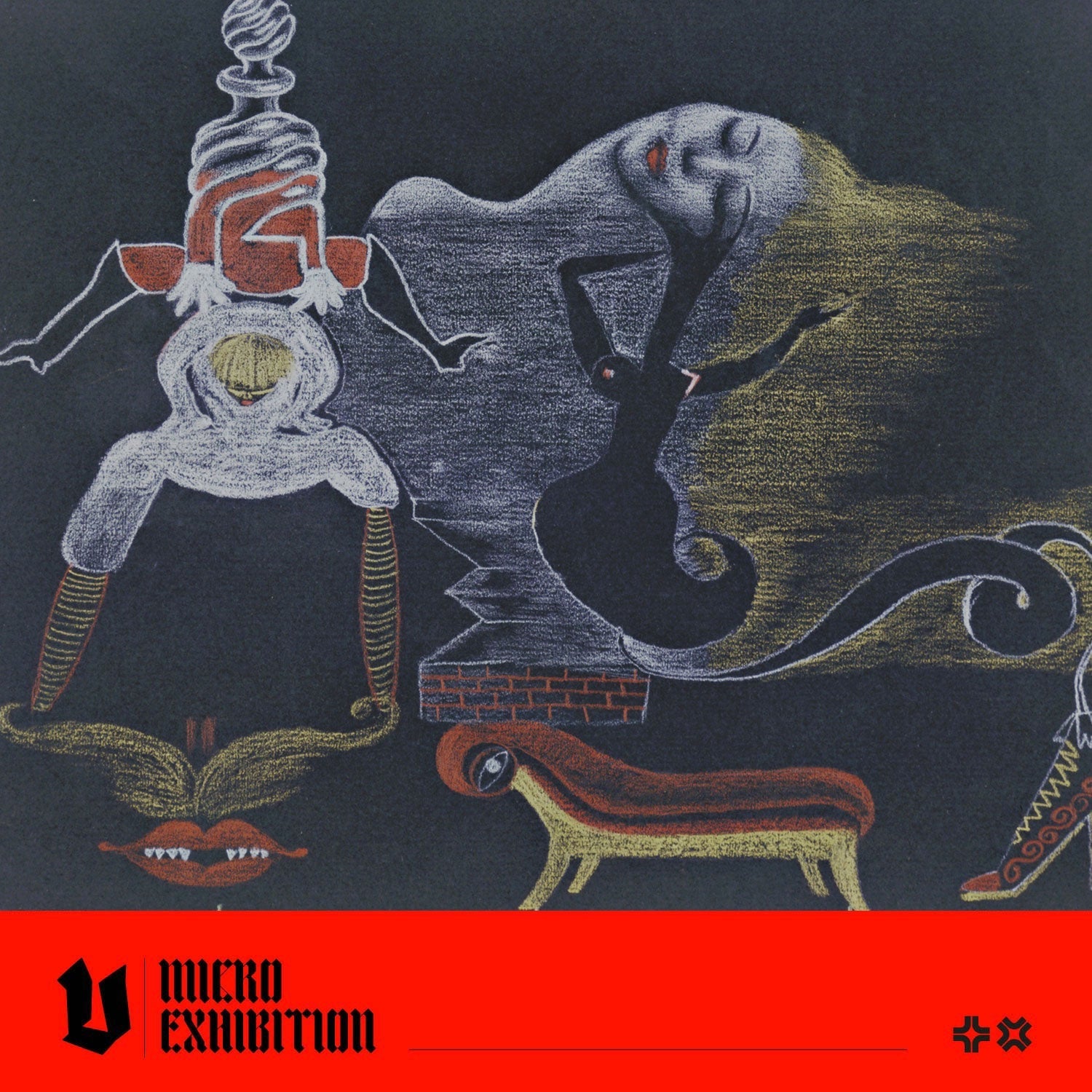
Cadavre Exquis with Esteban Francés, Remedios Varo, Oscar Domínguez, Marcel Jean Untitled 1935, © 2026 / Artists Rights Society (ARS), New York / ADAGP, Paris