Grisaille: How Artists Build Form Without Colour
Grisaille comes from the French gris, meaning grey. It describes a painting made entirely in shades of black and grey, or in a limited range of neutral, greyish tones. The effect often resembles carved stone, which is why the technique became popular in decorative schemes that aimed to imitate sculpture.
Artists have used grisaille in several different ways. Sometimes it stands as a finished artwork, but it can also serve as the underpainting for an oil painting, establishing tone before layers of colour are added. It was also widely used as a guide for engravers and printmakers. Rubens and his circle, for example, often produced monochrome panels to aid printmakers in interpreting complex compositions.
By the nineteenth century, many book and magazine illustrations were reproduced from watercolour grisailles. Working in grey was faster and cheaper than producing a fully coloured image, and many artists valued the clarity of tone, the sculptural modelling, and the focus on form that emerges when colour is removed. Monochrome image-making itself predates the term “grisaille” by several centuries. Medieval artisans working in stained glass and manuscripts often relied on restricted palettes, shaping form through tone rather than colour. Grisaille continues this way of thinking, refining it into a deliberate technique.

Peter Paul Rubens, The Last Supper, en grisaile
How Grisaille Works
Grisaille reduces everything to tone. Instead of relying on colour to separate forms or create depth, the artist works entirely through light and shadow. This is what gives grisaille its sculptural quality: form is built through modelling, almost as if the image were being shaped from stone. Three key aspects of creating a grisaille are:
1. Light Source
With no colour to fall back on, the light must be convincing. Highlights, mid-tones and shadows need to relate logically to one another, or the entire structure weakens.
With no colour to fall back on, the light must be convincing. Highlights, mid-tones and shadows need to relate logically to one another, or the entire structure weakens.
2. Value Range
Some grisailles use deep blacks and crisp whites; others stay within a narrower band of greys. A wide range creates strong contrast; a restrained range creates a softer, more controlled effect.
Some grisailles use deep blacks and crisp whites; others stay within a narrower band of greys. A wide range creates strong contrast; a restrained range creates a softer, more controlled effect.
3. Transitions
Hard transitions create carved, defined forms; soft transitions suggest gradual turns and subtle change. These choices shape the entire character of the surface, whether polished, weathered or delicate.
Hard transitions create carved, defined forms; soft transitions suggest gradual turns and subtle change. These choices shape the entire character of the surface, whether polished, weathered or delicate.
Without colour to disguise weak structure, the underlying drawing becomes clear. Grisaille stands or falls on the strength of its tonal decisions.
Grisaille in Practice: Three Examples
1. Hans Memling: Sculptural Illusion
Memling uses grisaille to depict what appears to be a stone statue set within an architectural niche. The technique allows him to merge painting with the illusion of sculpture, creating a devotional image that feels both physical and imagined. The weight of the figure and the fall of the shadows mimic the presence of real carved stone.

Hans Memling wing, with donor portrait in colour below grisaille Madonna imitating sculpture
Hans Memling wing, with donor portrait in colour below grisaille Madonna imitating sculpture
2. Jean-Auguste-Dominique Ingres: A Tonal Variation on the Odalisque
Artists often used grisaille to map tonal structure for engravers preparing black-and-white prints. We don't know if this work served that role, but Ingres’s grisaille version of the Odalisque is a smaller, stripped-back reinterpretation of his famous 1814 canvas. The figure, imagined as a concubine, became one of his defining studies of idealised form. Ingres revisited themes like this throughout his career, and his approach shaped generations of students who worked under him.

Jean-Auguste-Dominique Ingres, Odalisque in Grisaille
3. Jan van Eyck: Tonal Devotion
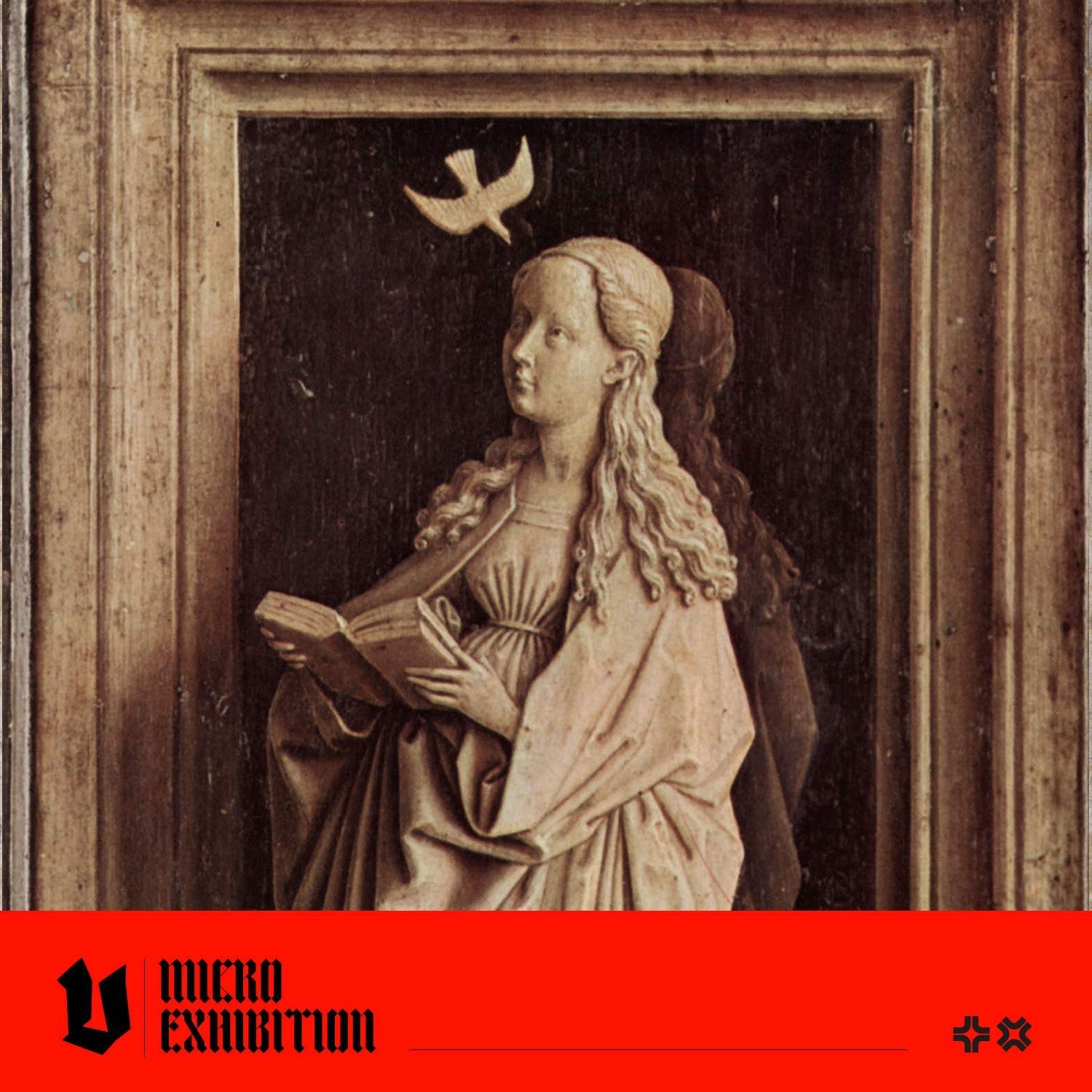
Van Eyck employed grisaille figures on the outer wings of altarpieces such as the Ghent Altarpiece, where they are painted to resemble carved stone. This illusionistic approach distinguishes the monochrome exterior from the vibrant inner panels. The subtle tonal modelling gives these figures a sculptural presence, directing attention to form and structure rather than colour.

Jan van Eyck, Annunciation (Gabriel is on the opposite wing)
Feeling Inspired? Try This
1. Build a ‘Sculpted’ Figure Using Three Values
- Choose a figure from your archive and reduce it to three tones: light, mid-tone and shadow.
- Block the tones in cleanly before adding detail.
- Work as if you are carving the figure from stone.
- This exercise mirrors the sculptural effects seen in Memling and Van Eyck and helps you understand form at its simplest.
2. Study Drapery in Grisaille
- Pick an illustration with strong folds or flowing fabric.
- Reinterpret it in grayscale.
- Pay attention to how light breaks across each fold and where the deepest shadows settle.
- This approach, inspired by Ingres, strengthens your ability to model surfaces through tone.