Inspired by our latest release, How to Draw Flowers, we've been exploring the long, strange history of botanical illustration, and few ideas in that history are stranger than the Doctrine of Signatures, the belief that plants reveal their medicinal uses through their physical appearance: a walnut looks like a brain, so it must be good for the mind; liverwort resembles the liver, so it must treat liver disease. Modern science has thoroughly debunked this theory, but it was accepted for centuries and inspired some extraordinary artwork. Today we're taking a closer look. Let's go!

Doctrine of signatures: a plant with roots resembling the human hand, above, and a truncated hand, below. Coloured ink drawing, c. 1923, after a sixteenth-century woodcut illustration. Wellcome Collection, in copyright, used under Creative Commons Attribution 4.0 International License
What Is the Doctrine of Signatures?
The idea is ancient, but the Swiss physician Paracelsus formalised it in the 16th century. Paracelsus argued that God had marked every plant with a visible sign of its purpose, and that a skilled herbalist could read those signs in the plant's shape, colour and form. The doctrine spread rapidly across Europe, entering the major herbal texts of the period and shaping how physicians and apothecaries understood and prescribed remedies for over two centuries.

Engraving from Wolfgang Ambrosius Fabricius’s De Signaturis Plantarum (1653), illustrating the "Doctrine of Signatures" by matching medicinal plants with the human organs they were believed to treat.
Here's some examples of the comparisons;
- Walnuts, with their wrinkled, two-lobed kernels, were prescribed for brain ailments.
- Liverwort, whose leaves were thought to resemble the lobes of a liver, was used to treat liver complaints.
- Bloodroot, named for its red sap, was used to treat blood disorders.
- Eyebright, a small flower with a dark centre ringed by lighter petals, was prescribed for eye conditions.
From a modern scientific perspective, most of these associations have no clinical basis and the theory as a whole belongs to a pre-scientific worldview in which God created the natural world and left it for humanity to interpret and understand.

Doctrine of signatures: a plant with flowers resembling the human eye, above, and a pair of eyes, below. Coloured ink drawing, c. 1923, after a sixteenth-century woodcut illustration. Wellcome Collection, in copyright, used under Creative Commons Attribution 4.0 International License
The Art of the Doctrine: Herbals and Botanical Illustration
The illustrations that accompanied the herbal texts of the 16th and 17th centuries were central to how the Doctrine of Signatures was communicated and understood. Artists and botanists worked together to produce images that were simultaneously scientific records and visual arguments, using the plant's shape, colour and form to make the case for its medicinal use.
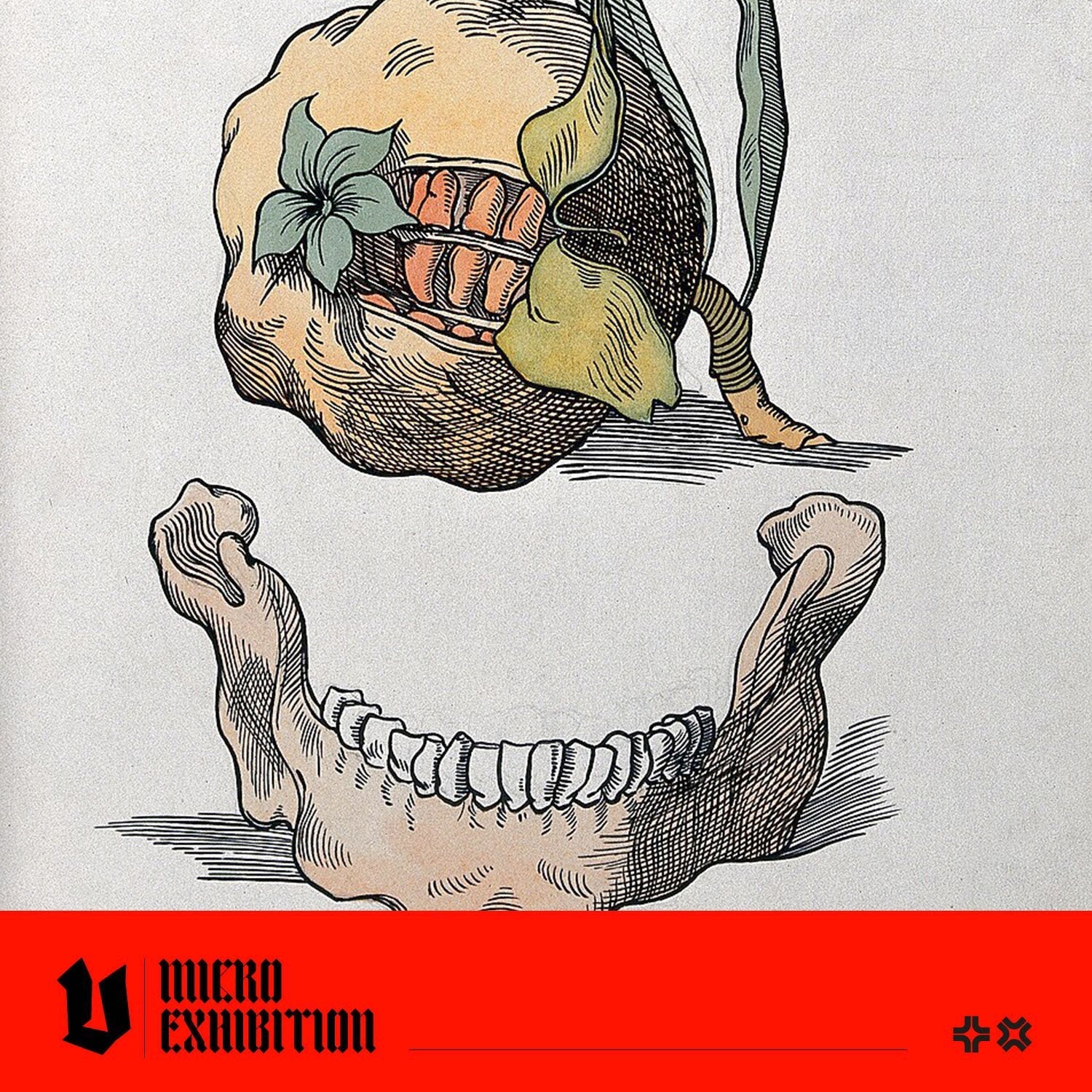
The Italian natural philosopher Giambattista della Porta produced the first systematic illustrated catalogue of plant signatures in his Phytognomonica (1588). His engravings highlighted plant resemblances to human body parts, such as roots shaped like hands and plants resembling jaw bones.
In England, the physician and herbalist Nicholas Culpeper brought the doctrine to a popular audience with his Complete Herbal (published in the early 1650s), written in plain English and priced so that ordinary people could treat themselves. Culpeper believed that plants were governed by the planets, and that matching a plant's astrological ruler to the patient's condition was as important as its physical signature.
Last week we wrote about Elizabeth Blackwell, who produced her own illustrated herbal in 1737. If you haven't read that piece, it's worth a look: Botanical Illustration: Four Artists You Should Know.

Doctrine of signatures: a plant (pomegranate fruit) resembling the human jaw, above, and a jaw-bone, centre, and teeth, below. Coloured ink drawing, c. 1923, after a sixteenth-century woodcut illustration. Wellcome Collection, in copyright, used under Creative Commons Attribution 4.0 International License
The Legacy of the Doctrine
The Doctrine of Signatures fell out of favour as empirical science took hold in the 18th and 19th centuries, and its influence on botanical illustration proved more durable than the theory itself. Contemporary botanical illustrators still return to these early works for inspiration and the visual language they established. The doctrine may be debunked, but the art it inspired is very much alive.
Please note: the Doctrine of Signatures has no scientific basis and should not be used to inform any medical decisions.
Feeling Inspired?
Our new book, How to Draw Flowers, is a step-by-step guide to botanical drawing for beginners and includes 40 stunning, full-colour drawing tutorials, illustrated by Kale James, the Vault Editions creative director. Get your copy today and start making your own botanical art.